EU Court: Players May Sue Directors of Unlicensed Online Gambling Operators Under Their Home Law
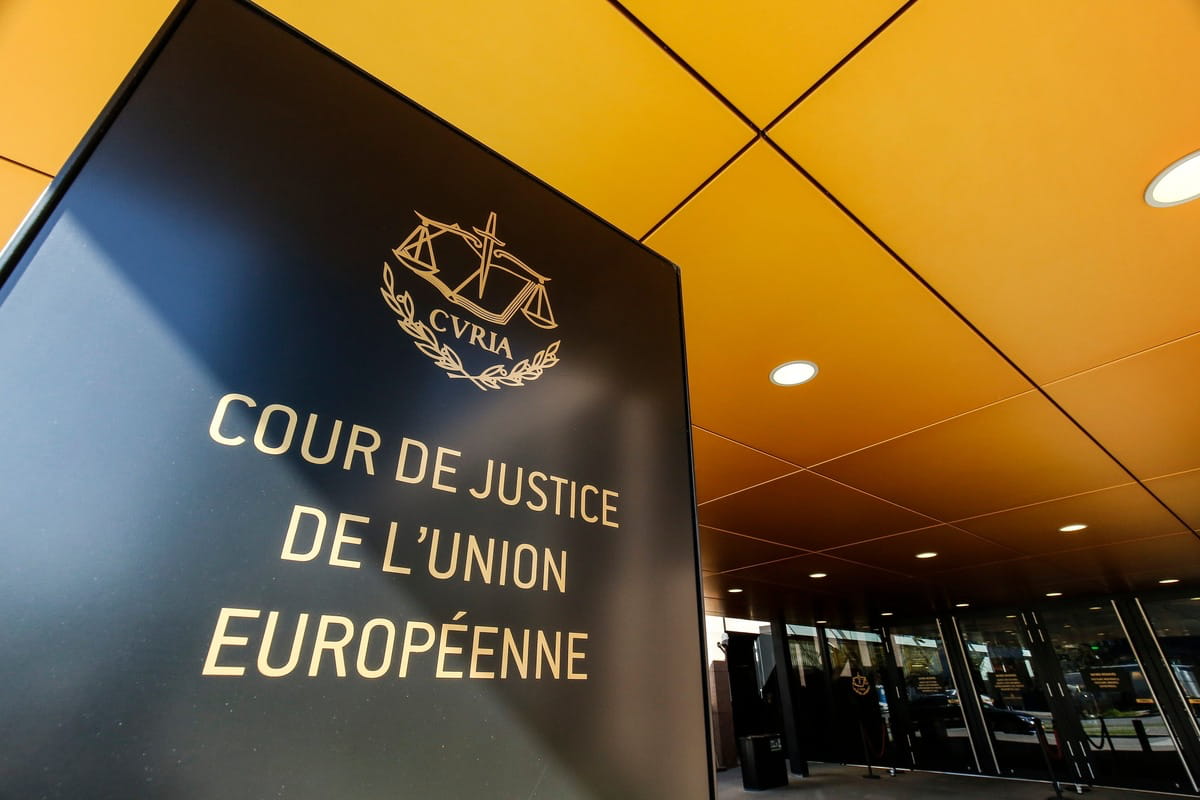
The Court of Justice of the European Union (CJEU) has ruled that, as a general principle, players who suffer losses from unlicensed online gambling may rely on the law of their country of residence when bringing civil claims against the directors of foreign gambling operators.
Key finding: In cases of unlicensed online gambling, the damage suffered by a player is deemed to occur in the country where the player is habitually resident, making that country’s law applicable in most cases.
The judgment was delivered on 15 January 2026 in Case C-77/24, following questions referred by the Austrian Supreme Court.
Background of the Case
The case concerned an Austrian player who participated in online gambling offered by a Malta-based operator that held a Maltese gambling licence but did not hold the licence required under Austrian law. The operator is currently in liquidation.
The player initiated proceedings before Austrian courts against the company’s two directors, seeking to recover his gambling losses. He argued that the gambling contracts were null and void under Austrian law and that the directors were personally and jointly liable for offering illegal gambling services in Austria.
The directors disputed the jurisdiction of the Austrian courts and claimed that Maltese law should apply, arguing that the damage occurred in Malta and that Maltese law (so called "Bill 55") does not provide for personal liability of company officers toward players.
Where Does the Damage Occur?
The Court examined the case under the Rome II Regulation, which governs the law applicable to non-contractual obligations within the European Union.
According to the Court, in the context of online gambling offered without the required national licence, the harm materialises where the player participates in the gambling activity and where consumer protection rules apply.
Key clarification: Claims against company directors for offering illegal online gambling are not excluded as matters of company law and may fall within the scope of tort liability under EU conflict-of-law rules.
As a result, actions seeking to establish personal liability of directors for breaches of national gambling prohibitions are, in principle, governed by the law of the player’s country of residence.
Possible Exceptions
The Court noted that national courts may depart from this general rule only where it is clear from all the circumstances that the case is manifestly more closely connected with another country. This exception, however, does not displace the default position established by the judgment.
What Happens Next
The Court of Justice did not decide the dispute itself. The case will now return to the Austrian courts, which must resolve it in line with the Court’s interpretation.
The ruling will also guide courts across the European Union when dealing with similar disputes involving cross-border online gambling and unlicensed operators.